
Keep going
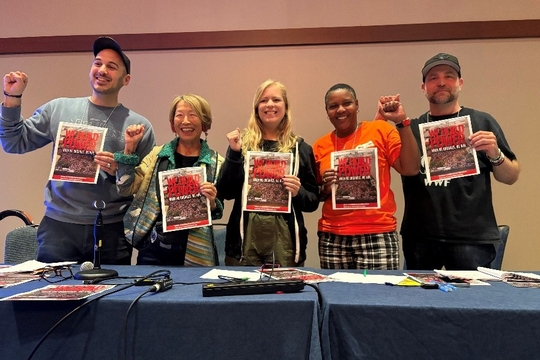
We can refuse to give up our purest intentions… We can ground ourselves with dignity… We can see ourselves reaching back through history, standing firm in the present moment, and arcing confidently to the future. The long haul calls us and we keep going.
Keep Going: A Guide to Organising When It’s Hard – Ellen David Friedman
The Labor Notes conference and annual meeting of UCORE (United Caucuses of Rank-and-File Educators) brought together militant trade unionists committed to democratic, bottom-up organising. Rank-and-file workers are at the heart of Labor Notes, and the conference provides an opportunity to share victories, experiences and lessons from organising. The overarching theme was the long haul: building sustainable power through relationships, democracy and collective action.
UCORE was established in 2014 during a national struggle against privatisation. Educators had encountered resistance from their own union bureaucracy, including claims that “people are too divided” and that “it’s complicated legally”. Rather than accepting these limitations, a group of educators met in Chicago and created UCORE around a simple philosophy: “Look across, don’t look up” and “Bring joy into everything we do.” UCORE members subsequently played leading roles in the Los Angeles teachers’ strike in 2018–19 and the 2018 Red State Strikes, demonstrating the potential of rank-and-file organising to challenge both employers and established union structures.
Educators Organising Against ICE
One of the most powerful sessions explored how educators have organised in defence of immigrant communities and against ICE.
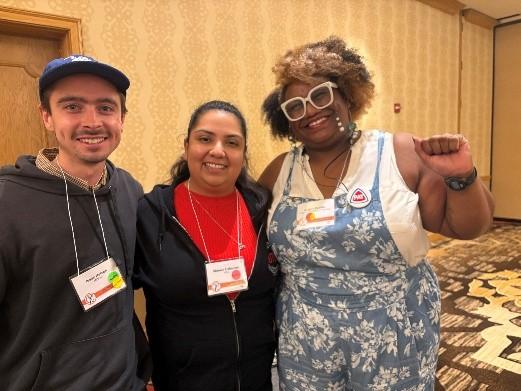
L to R Isaac Nelson, Monica Caballero, Angela Bonilla
Monica Caballero from United Teachers of Los Angeles described a diverse school community where families and students are central to the work. Educators wanted to protest where immigration officers were. They knew they would have to be rapid response trained. They created an Immigration Justice Team which organised Familiar Rights Training. She explained that “it was initially scary, but we used the fear to push ourselves – to fightback”. Structures were important -the community needed a point of contact. UTLA has a membership of 39,000 and they had a strong sense of responsibility to their families and students. “It was our job to force the authority to be proactive”.
Isaac Nelson from the Minneapolis Federation of Educators described the impact of Operation Metrosurge, which created fear among families and led to fewer students attending school. Educators established a Deportation Defence Committee, organised food drives and developed school patrols. Existing grassroots organising provided a strong foundation, but Isaac emphasised that effective rapid-response organising required time, patience and sustained discussion.
Angela Bonilla from Portland Association of Teachers explained how her state responded to the ICE raids by creating state-wide sanctuary laws. PAT members organised training in schools and developed the Portland Immigration Resource Centre. They knew that they needed to prepare for Rapid Response. They organised by going neighbour to neighbour and canvassing door-to-door. As she said “Only the community can save the community”
All three concluded that this is long-term organising and educators have a central role – we are in every single community.
The three experiences demonstrated the distinctive role educators can play. Schools are embedded in every community, and educators have relationships with families built around care and trust. “When you see your community is hurting, we as educators have empathy – our job is a labour of love. Schools are filled with people who care. We have the capability to mobilise and educate people”.
Key takeaways for organisers the long haul:
* Take a personal break.
* Consciously build leaders.
* Create a beacon of hope.
* Keep pushing – keep inviting.
* Create opportunities for joy.
Autonomy Against AI in Education
If you show the bosses a computer can do your job, then they will get a computer to do your job.
Another session examined the growing use of AI in education. Beginning with a song and a discussion about how AI is appearing in workplaces, educators described the replacement of specialists, the lack of workplace policies and the pressure to adopt technology without clear boundaries. There was also concern that AI is removing some of the creative and rewarding aspects of teaching while leaving educators with the hardest parts of the job.
The discussion focused on how educators can organise around these changes. Possible strategies included working with students and families, reaching out to less-engaged parents, developing AI and technology ethics policies, advocating for human-centred alternatives and articulating the labour implications of AI.
How to Keep Going – Ellen David Friedman
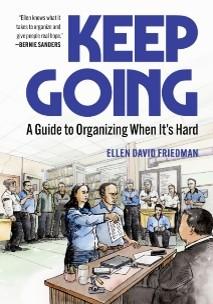
Ellen David Friedman, one of the founders of Labor Notes, led a session based on her book Keep Going. Her message was that organising requires radical patience. We should stop promising guaranteed results and instead focus on leaving members feeling more powerful and connected.
Rather than constantly chasing immediate wins, organisers should build relationships around shared goals that are strong enough for people to take risks together. Union power requires democracy, with the workplace as its starting point. A democratic union is one where members have genuine control and where inclusion is actively built into the culture.
When organising becomes difficult, Friedman argued that we should focus on what we can affect, stay grounded in reality and return to the basic work of building trust. We need to identify the people around us who can support an issue and avoid being carried from one emotional high to another.
A useful way to reconnect members with organising is to ask what first brought them into the profession. Where is that spark today, and what would bring it back? Reflecting on moments such as strikes can also help people recognise where power actually lay and what they learned through collective action.
This is particularly important when confronting what is often described as “apathy”. The answer is not to blame people for failing to act, but to understand what is holding them back. Fear, exhaustion, lack of confidence and previous experiences all shape how people respond. Genuine conversations, curiosity, warmth and listening are therefore central organising skills.
Bringing the Lessons Home – We Build Power
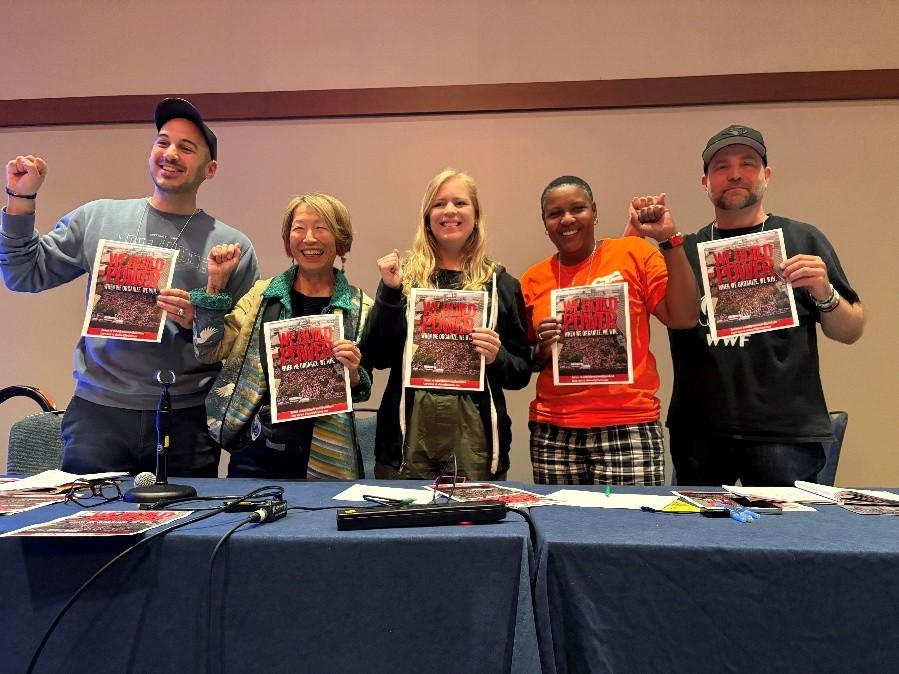
The strongest message from the conference was to keep going. Organising is not a quick process. It requires relationships, trust, patience and a willingness to keep building even when immediate victories are not guaranteed.
These lessons will inform our branch strategy. We are developing a plan to build power in our schools by strengthening relationships and alliances across our membership. We need to be curious and recognise that we are not the only people with knowledge. Asking members about their experiences and listening to what they have to say will help us understand both the problems they face and the possibilities for action.
This is particularly important as we confront falling rolls, the threat of academisation and a funding crisis that is putting our schools under enormous pressure. The experiences of UTLA and other rank-and-file educators demonstrate that collective action can provide an alternative to simply accepting decline.
Our aim is to organise around a shared vision for the greater good: to defend, preserve and rebuild a strong, free state education system with genuine democracy at its heart.
The challenges are significant, and change will take time. But the conference provided a clear reminder that our power comes from each other. By building relationships, developing leaders, creating hope and organising collectively, we can change the balance of power.
The long haul calls us. We keep going.
author
Eleanor Davies
Subscribe to Notes from Below
Subscribe now to Notes from Below, and get our print issues sent to your front door three times a year. For every subscriber, we’re also able to print a load of free copies to hand out in workplaces, neighbourhoods, prisons and picket lines. Can you subscribe now and support us in spreading Marxist ideas in the workplace?
Read next
Editorial: Why do inquiry today?
by
Notes from Below
/
June 10, 2026
